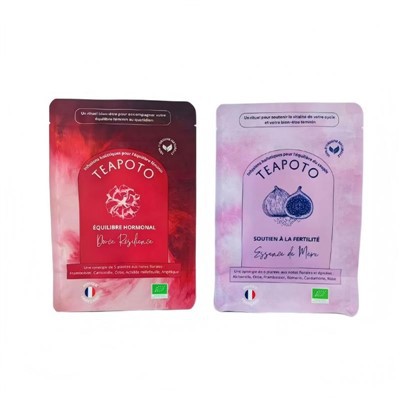
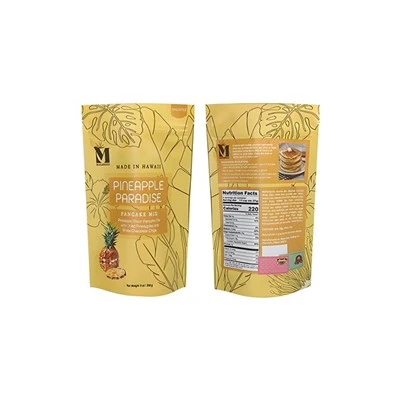
One of the biggest advantages of flexible packaging is its versatility. Brands can choose from different bag formats, materials, printing methods, and features based on the product, pack size, filling process, and market. Common formats include stand up pouches, flat bottom bags, side gusset bags, quad seal bags, and flat pouches, with options such as zippers, tear notches, valves, windows, and different surface finishes.
Coffee, Tea and Food Packaging Have Different Requirements
Coffee packaging often needs good oxygen, moisture, and light protection. For freshly roasted coffee, a one-way degassing valve may also be needed to release carbon dioxide while helping prevent oxygen from entering the bag. Depending on the product and pack size, brands can choose from flat bottom coffee bags, side gusset coffee bags, quad seal coffee bags, stand up coffee pouches, and other custom formats. A resealable zipper can be added when the package needs to be opened and closed repeatedly.
Tea packaging places particular importance on moisture protection, oxygen barrier, light protection, and aroma retention. The right material depends on the type of tea, shelf life, and storage conditions. Structures such as PET/AL/PE and PET/VMPET/PE can be used where higher barrier performance is required. Different pouch styles and finishes can also be used to create the desired look for the brand.
Food packaging covers an even wider range of products, including snacks, nuts, dried fruit, flour, rice, grains, and pet food. Their requirements can vary considerably. Snacks and nuts may need good barrier properties and convenient resealing, while flour requires reliable seals and leak resistance. Larger packs of rice, grains, or pet food may require greater material strength to handle filling, transportation, and storage.
Choosing the Right Flexible Packaging Format
There is no single bag format that works for every product. Stand up pouches offer good shelf presence and can be used for products such as snacks, nuts, tea, and pet food. Flat bottom bags provide a stable base and a structured appearance and are widely used for coffee. Side gusset bags offer additional capacity and are commonly used for coffee and larger pack sizes, while quad seal bags provide a more structured shape with multiple printable panels. Flat pouches are a practical option for smaller products, samples, and single-use applications.
The right format depends on more than appearance. Product weight, package size, filling equipment, transportation, shelf presentation, and consumer use should all be considered. For a new product, a flexible packaging supplier can also recommend a suitable format based on the product and its requirements.
Material Structure and Product Protection
The bag format determines how the package looks and functions, while the material structure plays a major role in product protection. Common flexible packaging materials include PET, PE, BOPA, BOPP, BOPE, VMPET, and aluminum foil. Depending on the structure, different layers can provide printability, strength, heat sealing, oxygen and moisture barrier, and light protection.
For products such as coffee, tea, and nuts, oxygen and moisture barrier performance can be important. Light-sensitive products may require metallized or aluminum foil structures. Film thickness alone, however, does not determine packaging performance. Factors such as OTR, WVTR, seal strength, puncture resistance, and required shelf life should also be considered. When selecting custom flexible plastic packaging, brands should evaluate the complete material structure rather than thickness alone.
Brands looking for more sustainable options can also explore lightweight and recyclable flexible packaging. Reducing unnecessary material through optimized dimensions, thickness, and structure can help reduce packaging use, while recyclable structures should be selected according to both product requirements and the recycling system in the target market.
Custom Printing and Packaging Features
Packaging is also an important part of a brand's presentation. Custom printing can reproduce logos, brand colors, product information, and graphics, with matte, glossy, and other finishes available to create different visual effects.
Digital printing is often suitable for smaller runs, multiple designs, new product launches, and market testing. Gravure printing is generally better suited to larger production runs and long-term projects. The best option depends on order quantity, number of designs, and production plans.
Functional features can also be added according to the product, including resealable zippers, one-way valves, tear notches, and transparent windows. The right combination depends on how the product is stored, filled, opened, and used. LepuPouch can help brands match these features with their product and packaging goals.
How to Choose the Right Flexible Packaging Supplier
A packaging project should start with the product, not with a specific bag format or material. Consider the product type, weight, shelf life, filling process, storage conditions, and sensitivity to oxygen, moisture, light, and mechanical damage. These factors can then be used to determine the material structure, bag format, features, and printing requirements. LepuPouch supports this product-first approach when developing packaging solutions for coffee, tea, and food brands.
For example, a 250 g specialty coffee product could use a flat bottom bag, side gusset bag, quad seal bag, or another suitable format. Depending on the coffee and its storage requirements, it may also need a high-barrier structure, one-way valve, and resealable zipper.
The same applies to nuts, snacks, tea, flour, rice, and other food products. One product may work well with several different packaging formats, so the final choice should be based on the specific application rather than following a fixed formula.
When requesting a quotation from a flexible packaging supplier, providing the product type, pack weight, bag format, dimensions, material requirements, number of designs, order quantity, and shipping destination can help the supplier provide a more accurate recommendation and price.
Explore Flexible Packaging Solutions
Whether you need coffee packaging, tea packaging, or food packaging, the right solution should be built around your product. From coffee bags and tea pouches to snack bags, nut packaging, flour bags, and pet food packaging, different combinations of bag formats, materials, printing, and features can be tailored to different applications.
For brands evaluating a flexible packaging supplier, LepuPouch provides custom flexible plastic packaging with practical product protection, reliable packaging features, and a clear path from project requirements to quotation. Explore LepuPouch's flexible packaging solutions by product type, bag format, and application to find the right option for your next packaging project.
LepuPouch Product