

Green PE Is Changing the Way We Think About Sustainable Packaging
For food brands and packaging manufacturers, sustainability is no longer just about choosing recyclable materials or reducing plastic thickness. More businesses are looking at the raw materials used to make their packaging and asking a new question: Can we reduce our reliance on fossil resources without sacrificing packaging performance?
Green PE is one material attracting growing attention.
Also known as bio-based polyethylene, Green PE is produced using renewable biological resources rather than relying entirely on conventional fossil-based feedstocks. Sugarcane is one of the best-known sources, although other biomass-derived feedstocks and production routes are also being developed.
What makes Green PE particularly interesting for the flexible packaging industry is that it can offer the same fundamental polymer structure as conventional polyethylene (PE). With an appropriately selected resin grade, manufacturers can retain familiar processing characteristics, sealing performance, and mechanical properties while introducing renewable carbon into the packaging material.
For brands that need plastic packaging bags, food pouches, or other flexible packaging products, this creates an opportunity to explore a lower-fossil-resource alternative without necessarily redesigning the entire packaging system.
However, Green PE is not a universal solution for every sustainability challenge. Its benefits depend on the material grade, packaging structure, manufacturing process, sourcing route, and end-of-life management.
Understanding these details is the first step toward making a practical packaging decision.
From Renewable Plants to Polyethylene
Green PE is a type of bio-based polyethylene made from renewable biological feedstocks. It is important to distinguish the origin of the raw material from the properties of the finished plastic.
In a conventional production route, polyethylene is generally made from ethylene derived from fossil-based feedstocks. In the sugarcane-based Green PE route, the process starts with renewable plant material instead.
The production process typically involves four stages.
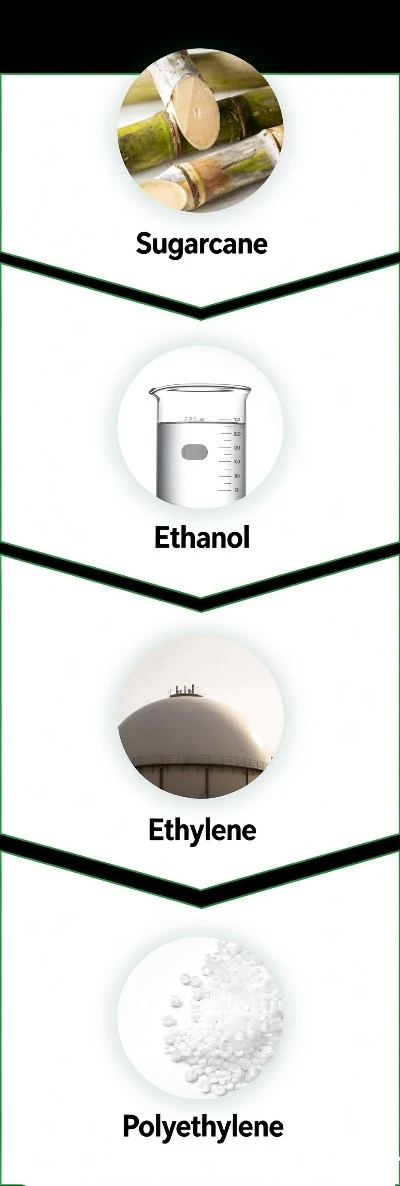
Step 1: Extracting sugars from plants
Sugarcane is harvested and processed to extract sugar-rich juice. The remaining bagasse can also be used as a source of process energy, depending on the production facility.
Step 2: Fermenting sugar into ethanol
Microorganisms convert fermentable sugars into bioethanol. The ethanol is then purified to meet the requirements of downstream chemical processing.
Step 3: Converting ethanol into ethylene
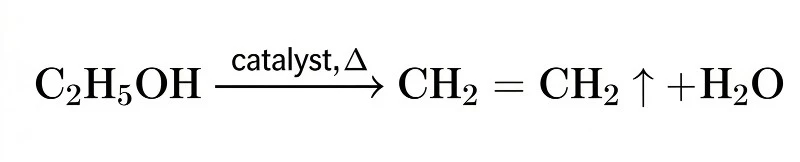
Through catalytic dehydration, ethanol is converted into ethylene, the chemical building block used to produce polyethylene.
Step 4: Polymerizing ethylene into PE resin
The bio-based ethylene undergoes polymerization to produce polyethylene. Depending on the process and resin grade, manufacturers can obtain materials suitable for applications involving HDPE, LDPE, or LLDPE.
The resulting polymer can have the same molecular structure as its fossil-based counterpart. This is why Green PE is often described as a drop-in material: it can potentially be integrated into existing PE processing and recycling systems.
In practice, however, compatibility should still be confirmed for the specific resin grade, film structure, and production conditions.
For flexible packaging manufacturers, this distinction matters. A renewable raw material does not automatically mean a completely new manufacturing process is required, but it does not eliminate the need for material testing and process validation either.
Green PE vs. Conventional PE vs. Biodegradable Plastics
One of the most common misconceptions in sustainable packaging is that all plant-based plastics are biodegradable.
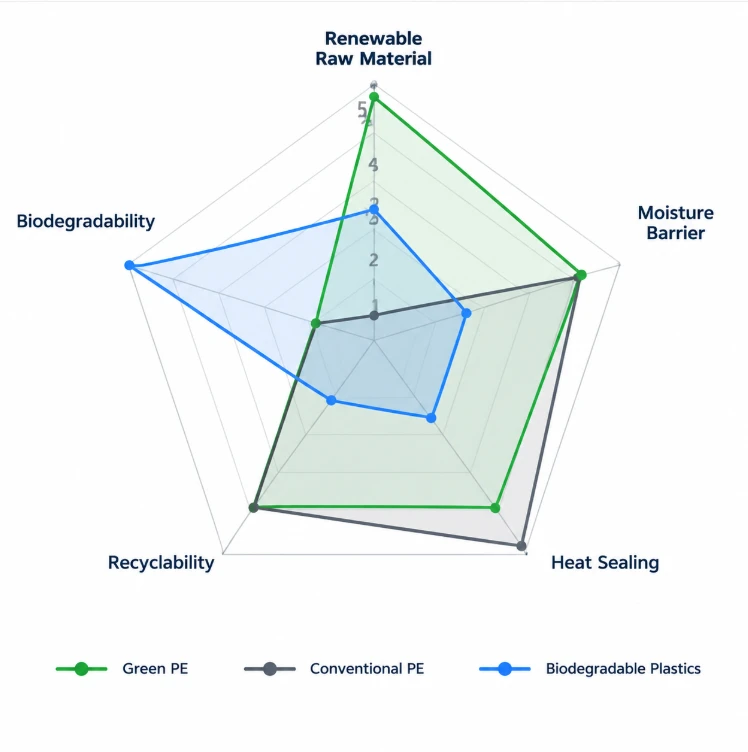
Green PE is bio-based but is not inherently biodegradable. PLA and certain PHA materials, by comparison, can be biodegradable under specified conditions, depending on their formulation and certification.
The difference is especially important for food packaging, where material performance, product protection, and disposal instructions all influence the final packaging choice.
For most flexible packaging applications, the most useful comparison is not simply whether a material is plant-based or biodegradable. It is whether the material delivers the required performance while fitting the intended recycling and waste-management system.
Green PE is particularly relevant when a brand wants to introduce renewable raw materials while retaining the established advantages of polyethylene.
|
Comparison |
Green PE |
Conventional PE |
Biodegradable plastics |
|
Raw material |
Renewable biological feedstocks, depending on the route |
Primarily fossil-based feedstocks |
Bio-based, fossil-based, or a combination |
|
Polymer structure |
Can be chemically identical to conventional PE |
Polyethylene |
Depends on the polymer |
|
Moisture barrier |
Generally comparable to conventional PE of the same grade |
Generally good |
Varies by material and formulation |
|
Heat sealing |
Can offer familiar PE sealing behavior |
Established PE sealing performance |
Depends on material and processing conditions |
|
Biodegradability |
Not inherently biodegradable |
Not inherently biodegradable |
Only where the specific material is biodegradable under defined conditions |
|
Recycling compatibility |
Generally compatible with PE recycling when the packaging design and collection system permit |
Depends on the packaging design and local recycling system |
Depends on the material and available waste-management infrastructure |
Where Does Green PE Fit into Flexible Food Packaging?
Polyethylene plays a central role in flexible packaging because it combines flexibility, moisture resistance, and heat-sealing capability.
In many laminated pouches, PE serves as the inner sealing layer. In other applications, it can form a larger proportion of the structure or be used in a predominantly PE-based film.
This makes Green PE particularly interesting for packaging manufacturers exploring renewable materials without changing every component of a package.
Flexible pouches and laminated packaging
Green PE may be considered for the sealing layer of stand-up pouches, pillow bags, flat pouches, and other laminated packaging formats.
For example, a conventional PET/PE structure may be evaluated with bio-based PE replacing the fossil-based PE component.
The outer PET layer can continue to provide printability and mechanical support, while the PE layer provides sealing and moisture protection.
The exact structure should be selected according to the product, filling process, storage conditions, and packaging performance requirements. A bio-based inner layer does not automatically make a multilayer pouch recyclable.
Single-material PE packaging
For brands seeking better compatibility with PE recycling streams, mono-material PE packaging is another important development.
Structures based on combinations of PE films, including appropriately engineered MDO-PE or BOPE structures, can help balance stiffness, appearance, printability, and sealing performance.
Bio-based PE can potentially be incorporated into these structures to introduce renewable carbon while maintaining a PE-based material system.
However, recyclability depends on the complete package, including barrier layers, adhesives, inks, coatings, closures, and local recycling infrastructure. A structure should be evaluated against the relevant design-for-recycling guidelines rather than labelled recyclable solely because it contains PE.
Frozen food and moisture-sensitive products
PE is widely used in packaging for frozen foods and other products requiring moisture protection and reliable seals.
Green PE grades with suitable properties may be considered for these applications. Nevertheless, puncture resistance, low-temperature flexibility, seal strength, and durability must be verified against the actual product and distribution conditions.
For frozen food bags, for example, maintaining seal integrity during handling and storage is just as important as the renewable origin of the material.
Green PE and European Packaging Regulations
For companies selling packaged products internationally, sustainability decisions also need to reflect changing packaging regulations.
The European Union's Packaging and Packaging Waste Regulation (PPWR), Regulation (EU) 2025/40, entered into force in February 2025, with its general application beginning on 12 August 2026, subject to the specific timelines and transitional provisions of individual requirements.
The regulation introduces requirements relating to packaging minimisation, recyclability, recycled content, and other aspects of packaging sustainability.
Green PE may support a brand's efforts to reduce reliance on fossil feedstocks. However, it should not be treated as an automatic substitute for recycled plastic or as an automatic route to regulatory compliance.
In particular, bio-based PE does not inherently count as post-consumer recycled plastic (PCR). Applicable recycled-content obligations and bio-based material provisions must be assessed separately.
For packaging intended for the EU market, buyers should consider several questions:
- Is the complete packaging design compatible with the relevant recyclability requirements?
- Does the package fall within a category subject to specific recycled-content obligations?
- Can the material supplier provide traceability and environmental documentation?
- Are all environmental claims supported by evidence appropriate to the destination market?
A packaging manufacturer can help evaluate material structures and production feasibility, but final compliance also depends on the product, market, packaging category, and the brand owner's obligations.
Planning these issues early can help businesses avoid expensive redesigns and unsupported sustainability claims.
Custom Flexible Packaging Solutions from Lepu
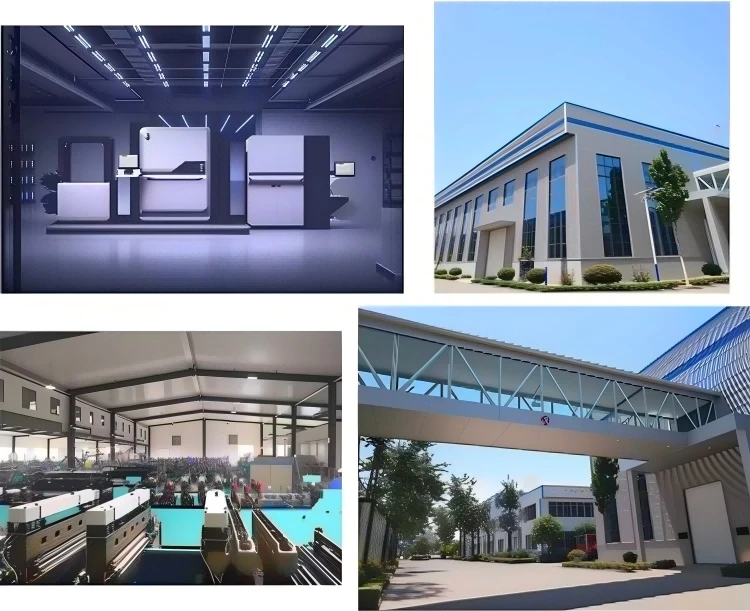
At Lepu, we understand that packaging development involves more than selecting a material. Food brands need packaging that protects their products, presents their identity, performs consistently during filling and sealing, and can be manufactured at the required volume.
As a flexible packaging manufacturer serving B2B customers, Lepu supports the development of customized plastic packaging bags and flexible packaging products based on individual project requirements.
Our capabilities include customized packaging formats, printing options, and production planning for different order sizes. Our in-house Miyakoshi MJP30X water-based inkjet digital printing technology also supports short-run packaging projects where brands need greater flexibility without conventional plate-making requirements.
This can be useful for product launches, packaging trials, seasonal products, and customized designs before moving to larger production quantities.
For customers exploring Green PE, the first step is to assess the intended packaging format and material requirements. Resin availability, food-contact suitability, film performance, certification needs, and total cost should all be reviewed before confirming a production specification.
Green PE is not automatically the right choice for every food product. Our goal is to help customers evaluate practical packaging options based on their application, specifications, and commercial requirements.
If you are developing a new food product or exploring more sustainable plastic packaging, contact Lepu to discuss your packaging structure, target dimensions, printing requirements, and estimated order quantity.
FAQ
Q: Is Green PE biodegradable?
A: No. Green PE is generally not biodegradable under ordinary environmental conditions. Although it can be produced from renewable biological resources, its polymer structure can be identical to conventional polyethylene.
Q: Can Green PE be recycled with conventional PE?
A: Generally, yes. Green PE made from the same polyethylene polymer can be compatible with existing PE recycling processes. Actual recyclability depends on the complete packaging structure, additives, collection systems, and local recycling infrastructure.
Q: Can Green PE be used for food packaging?
A:Potentially, yes. A suitable grade can be considered for food packaging applications, provided it meets the applicable food-contact requirements and delivers the necessary sealing, mechanical, and barrier performance.
Q: Could you provide packaging bag design services?
A: If you don't have a design draft, our factory has a professional design team that can provide layout and basic design services based on your requirements.
Q: What is your minimum order quantity MOQ?
A: The minimum order quantity for traditional gravure printing is typically 10,000 units, depending primarily on bag size. For initial trial runs or small batches with multiple SKUs, we also offer digital printing services with orders as low as 500 units.

Explore Custom Flexible Packaging with Lepu
Looking for customized flexible packaging for your next project? Share your requirements with Lepu, and our team can help you evaluate suitable packaging options for your product and production needs.