

If you've ever received an entire batch of goods that turned rancid, caked, or discolored before even hitting the shelves, you understand the high cost of substandard packaging barrier performance. For food manufacturers and industrial suppliers, barrier properties are far from a trivial technicality - they directly determine product loss rates, return volumes, and a brand's long-term reputation.
Drawing on over a decade of experience supplying custom barrier bags to clients across more than 20 industries, LepuPouch has observed a recurring pattern: many brands either overspend on excessively high-barrier packaging, needlessly inflating costs, or use materials with insufficient specifications, leading to severe quality losses once goods are in transit. In response, LepuPouch has created this guide to break down the three core barrier functions, clarify the real-world performance limits of common materials, and share practical insights from past client projects - helping flexible packaging wholesalers match barrier specifications to their products' actual needs.
Before diving in, a note on testing standards: all standard barrier property values cited in this article follow widely accepted industry test methods. Oxygen Transmission Rate (OTR) is measured according to ASTM D3985 at 23°C, 0% relative humidity (dry conditions). Water Vapor Transmission Rate (WVTR) is measured according to ASTM E96 at 38°C, 90% relative humidity. Lab values provide a uniform baseline for comparison, but real-world performance will vary with storage temperature, humidity levels, and handling conditions - which is why a detailed consultation is essential to finalize the specific material structure.
Oxygen Barrier: Preventing Oxidation in High-Fat and Perishable Products
Oxygen triggers oxidation reactions that degrade organic materials, rendering products unsellable. When food is exposed to oxygen, nuts, seeds, and fried snacks develop rancid off-flavors, meat products discolor, and dried fruits and nutritional powders lose their nutrient content. For active cosmetic ingredients, industrial chemical preparations, and similar oxygen-sensitive products, exposure shortens shelf life.
Common Oxygen-Barrier Materials and Their Actual Performance Limits
Oxygen barrier performance depends heavily on material structure - no single material suits every application. Below are the most widely used materials in custom flexible pouch production, along with their often-overlooked limitations:
Ethylene Vinyl Alcohol (EVOH): Offers excellent oxygen barrier properties under dry conditions (standard grades have an OTR well below 2 cc/m²·day), with superior transparency compared to metallized or foil structures. Its core weakness is hydrophilicity - under prolonged high-humidity exposure (above 65% RH), oxygen barrier performance drops significantly because absorbed moisture plasticizes the polymer, increasing molecular permeability. Consequently, EVOH is almost always used as a core layer, sandwiched between moisture-resistant PE or PP layers to isolate it from ambient humidity. It remains the top choice for retort pouches, refrigerated food packaging, and medium-shelf-life stand-up pouches.
Polyamide (Nylon, PA): Provides moderate oxygen barrier properties combined with excellent puncture resistance and temperature tolerance. It is less humidity-sensitive than EVOH but delivers a slightly inferior oxygen barrier, making it a common choice for frozen food and vacuum-packed meat applications where physical durability is the priority.
Vacuum Metallized PET (VMPET): Delivers excellent oxygen barrier properties at a lower cost than aluminum foil or high-end EVOH, while also providing moisture and light barrier functions. Its main drawback is that the thin metallized layer can develop micro-cracks when flexed or in contact with sharp product edges, gradually reducing barrier performance over time. It is an outstanding choice for snack foods, spices, and powdered products with a shelf life of 6–12 months.
Aluminum Foil: Provides a near-absolute oxygen barrier (effectively zero transmission when the film is intact), making it the standard for long-term applications requiring a shelf life of 12 months or more. The trade-offs include higher cost, complete opacity, and susceptibility to pinholes from repeated flexing or rough handling. It is widely used for coffee packaging, military rations, pharmaceutical sachets, and export products with extended logistics cycles.
LepuPouch provides custom oxygen-barrier bags widely used for coffee, nuts, tea, and similar categories. We design packaging structures tailored to your product's shelf life and storage/transport environment, delivering targeted antioxidant protection for B2B bulk orders.
LepuPouch oxygen-barrier bags


Moisture Barrier: Preventing Dry Products from Deteriorating Due to Moisture During Transport
Water vapor permeation is the primary cause of quality degradation for dry, low-moisture products shipped through humid climates. When moisture penetrates packaging, it causes cereals and crackers to lose their crunch and nutritional powders and industrial chemical blends to form hard lumps. For brands exporting to tropical regions or using ocean freight, a failure in moisture barrier protection can render an entire container load unsellable.
Moisture-Barrier Material Performance and Trade-offs
Moisture barrier performance is measured by WVTR - the lower the value, the better the protection. Common flexible packaging materials rank from basic to high-end as follows:
Polyethylene (PE): Provides basic, cost-effective moisture protection suitable for short-shelf-life products stored in controlled indoor environments. It is the lowest-cost sealant layer, used in virtually every multi-layer pouch structure, but a PE layer alone is insufficient for moisture-sensitive products.
Polypropylene (PP): Offers better moisture barrier performance than PE, along with higher heat resistance, making it suitable for hot-fill and microwaveable applications. Commonly used for medium-shelf-life confectionery and dry food packaging.
Vacuum Metallized PET (VMPET): Delivers excellent moisture barrier properties while also providing a moderate oxygen barrier and light protection, making it the most common mid-range solution for wholesale snack packaging and industrial powder products. It achieves a strong balance of performance and cost for the vast majority of products with a 6–12 month shelf life.
Aluminum Foil: Provides a complete water vapor barrier, making it the only reliable choice for products requiring an 18+ month shelf life or exposure to extremely high-humidity environments.
In practice, the vast majority of industrial and food-grade barrier packaging uses a multi-layer composite structure to balance various properties. The standard high-barrier configuration is: PET print layer / adhesive / aluminum foil / adhesive / PE sealant layer. This structure simultaneously achieves oxygen barrier, moisture barrier, and light barrier performance, with the PE layer ensuring reliable heat-seal properties during filling and production.
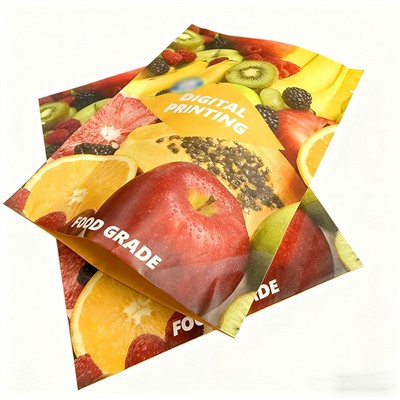


Light Barrier: Protecting Nutrients and Flavor from UV and Shelf Lighting
Light, especially ultraviolet radiation from sunlight and retail fluorescent lighting, triggers photodegradation reactions that break down sensitive components. For food and beverages, photodegradation causes off-flavors in juices, dairy products, and beer, and accelerates rancidity in nut oils and baked goods. For nutraceuticals and cosmetics, light exposure destroys vitamins, antioxidants, and active ingredients, undermining the efficacy that supports a product's premium value.
Light-Blocking Solutions for Flexible Plastic Pouches
Light protection ranges from partial UV shielding to complete opacity, often integrated with oxygen and moisture barrier layers into multi-functional composite structures:
Metallized Film: Reflects UV radiation and the majority of visible light, providing medium-to-high-level light blocking in a multi-layer structure. This is the most common choice for snacks and dry powder products that do not need transparent display windows but don't require foil-level performance.
Aluminum Foil: Blocks 100% of light, representing the highest level of protection available. It is a mandatory specification for highly light-sensitive products such as infant formula, specialty pharmaceuticals, and specialty coffee.
For brands emphasizing "no additives" or "cold-processed" positioning, light barrier is often a hard specification requirement - because these formulations rely entirely on packaging, rather than chemical preservatives, to maintain product quality.
LepuPouch can customize flexible barrier pouches with different levels of light protection, covering both metallized and aluminum foil light-blocking solutions. Click to browse our light-barrier bag products and find the packaging solution that matches your product needs.
Products Description
Some products face simultaneous threats from oxygen, moisture, and light - specialty roasted coffee is a prime example. Freshly roasted coffee beans release carbon dioxide while being highly susceptible to oxidation-induced staling, moisture absorption and spoilage, and UV-driven flavor degradation. Such products require a combined triple-barrier structure, typically integrated with functional accessories like one-way degassing valves.
A specialty coffee roaster supplying bulk roasted beans to cafés and boutique retailers was receiving consistent feedback that their coffee tasted flat and stale within 4 weeks of delivery. Their previous generic printed bags lacked targeted barrier design, relying on a single printed PET layer that offered very limited protection.
LepuPouch developed a custom triple-barrier stand-up pouch featuring an aluminum foil core layer and a food-grade PE inner sealant layer, equipped with a one-way degassing valve. This structure provides a near-absolute barrier against oxygen, moisture, and light, while allowing the release of CO₂ emitted by freshly roasted beans without letting outside air in. We also reinforced the edge seals to prevent flex-cracking during wholesale pallet transport.
After switching to the new packaging, the roaster's quarterly B2B customer satisfaction survey showed that over 90% of café clients rated the freshness of coffee beans stored for 8 weeks as "excellent" - compared to only around 30% with the original packaging. With greater confidence in on-shelf stability, customers increased their stock quantities, driving an average wholesale order value increase of nearly 30% per quarter.

How to Choose the Right Barrier Structure: 5 Practical Guidelines for Wholesale Buyers
Selecting barrier packaging isn't about choosing the "best" material - it's about matching performance to your specific risk profile, shelf-life targets, and budget. Based on our experience designing thousands of custom bulk barrier pouches, we recommend all wholesale buyers follow these guidelines:
- Address the biggest risk factor first.
Not every product needs an aluminum foil triple barrier. Dry grains stored in a temperate climate may require only basic moisture protection, while high-fat nut butters for export need strong oxygen and moisture barriers simultaneously. Over-engineering simply creates unnecessary cost. - Design for the harshest link in your supply chain, not your warehouse conditions.
The barrier specification is dictated not by your climate-controlled warehouse, but by the hottest, most humid segment of the transport route. Ocean freight, cross-border summer shipments, and tropical destination markets all demand higher barrier specifications. - Calculate total cost, not just unit price.
If a slightly more expensive barrier structure reduces product losses by 30%, the overall economic benefit will almost always outweigh the savings from a cheaper bag with a high spoilage rate. - Don't overlook the weakest point.
The upper limit of barrier performance is determined by seal integrity. Zippers, spouts, degassing valves, and heat-seal edges are all potential leak points. Even the highest-performing film is useless if these areas fail. A reliable manufacturer will match seal width and sealing systems to the barrier grade of the film. - Verify compliance upfront.
Food-grade barrier bags must meet FDA, EU, or the corresponding regional food-contact safety standards. For pharmaceutical and medical applications, full traceability and certification documentation are mandatory for bulk supply.
LepuPouch Custom Barrier Pouch Manufacturing Services
As a flexible packaging manufacturer focused on B2B wholesale and custom production, LepuPouch does not sell ready-made, off-the-shelf stock bags. Every barrier structure we produce is engineered around the client's specific product characteristics, shelf-life requirements, distribution conditions, and order volumes.
Our capabilities cover a full spectrum of barrier packaging solutions:
- Multi-layer composite structures utilizing EVOH, Nylon, metallized PET, and aluminum foil, with verifiable OTR and WVTR performance data
- Full-category barrier options: oxygen-barrier pouches, moisture-barrier pouches, light-blocking/UV-protection pouches, and combined triple-barrier configurations
- Full-category pouch styles: stand-up pouches with zippers, flat pouches, spouted pouches, retort pouches, vacuum pouches, and shaped sachets
- Sustainable material options: food-grade recyclable films, biodegradable PLA/PBAT blends, barrier films incorporating post-consumer recycled (PCR) content to meet brand ESG goals
- Value-added features: easy-tear notches, hang holes, semi-barrier transparent windows, degassing valves, microwaveable structures
For wholesale procurement clients, our core strength lies in an engineering-driven service model: we first gain a deep understanding of your product and supply chain pain points, then recommend the most cost-effective barrier solution that precisely meets your performance requirements - never overselling high-spec materials you don't truly need.
If you are evaluating barrier packaging solutions for a new product line, or are dealing with recurring quality issues from an existing supplier, we can help. Contact our B2B packaging specialists with details of your product, target shelf life, and estimated order volume, and we will provide a customized barrier structure recommendation, material sample options, and a competitive wholesale quote within 24 working days.