

"Plant-based" used to be a line we saw once in a while on the back of a coffee bag. These days, it shows up in almost every packaging brief we get at LepuPouch - usually right next to price and lead time, with a launch date circled in red.
Here's the catch that trips a lot of buyers up: plant-based packaging isn't one material. It covers two completely different pouch structures, with different barrier numbers, different end of life routes, and very different cost curves. Pick the wrong one and you'll either end up with a sustainability claim you can't defend when a retailer audits you, or a pouch that jams on your filling line. Let's break down what plant-based flexible packaging actually means, how bio based PE stacks up against compostable films, and what to figure out before you lock in a structure.
What "plant-based" actually means - bio-based, biodegradable, compostable
You see these three words used as synonyms all the time in marketing copy. They aren't, and the gap between them costs brands real money.
European Bioplastics says a plastic counts as a bioplastic if it's bio-based, biodegradable, or both. The definition is broad on purpose, because it describes two separate ideas. Bio-based tells you where the carbon came from - partly or fully renewable stuff like sugarcane, corn, wood pulp, or cellulose. Biodegradable tells you what happens to the pouch at the end of its life, not where it started. The European Commission draws the same line: origin and end-of-life are two independent questions.
Compostable is the tighter, testable category. It's a subset of biodegradable, and it has to break down within a set time, temperature, and residue limit under a recognized standard - EN 13432 for industrial composting in Europe, ASTM D6400 in the US, plus home-compost standards where a market actually recognizes them.
So a pouch can be bio-based but not biodegradable (bio-PE behaves exactly like regular PE), or biodegradable but not bio-based (some PBAT grades run on fossil feedstock). "Plant-based" by itself tells a buyer almost nothing about recyclability, compostability, or carbon. Always ask which material family you're getting before you accept the word on a spec sheet.

The two plant-based pouch families you'll actually get quoted
When you ask for plant based pouches, you'll pretty much always get one of two answers back.
Family one: bio-based polyethylene (bio-PE). It's made from sugarcane ethanol instead of crude oil, but chemically it's identical to conventional PE. Same molecule means same processing: mono-material PE structures using bio-based resin run like their fossil twin on extrusion, lamination, printing, and heat sealing, and they still drop straight into existing PE recycling streams. This is the sugarcane packaging story most brands recognize - and the family for anyone building their sustainability claim on recyclability. Roasters moving a single-origin line over first usually start with a recyclable coffee packaging spec, then copy it across the range once it's proven.
Family two: compostable bio-polymers. Think PLA, PBAT, and cellulose-based films, blended to balance stiffness, toughness, and barrier, and designed to break down into soil or biomass under composting conditions. Our compostable packaging line at LepuPouch is built on food-grade bio-polymers and FSC-certified cellulose, tested to EN 13432 and ASTM D6400, with BPI and OK Compost certification in hand. Cool, dry storage gets you about 10–12 months of shelf life; home-compostable grades are available if your market needs them.
Neither family is "better." One optimizes the recycling loop; the other handles end-of-life where collection infrastructure simply doesn't exist.

Why bio-based PE recycles and compostable film doesn't
Recycling plants sort by polymer type, not by what the feedstock was. A sugarcane-derived PE pouch and a fossil-derived PE pouch carry the exact same resin ID, so both go down the same PE stream. A compostable PLA or PBAT pouch can't - it's a different polymer class, and tossing one into a PE bale is contamination.
That's the core argument for bio-based PE in markets with mature collection, and the design rule that makes it work is mono-material construction. Traditional high-barrier builds use PET and nylon, which can't be recycled together. A recyclable plant-based structure has to keep the whole laminate inside one polymer family. Our recyclable mono-PE range uses an EVOH-based high-barrier build with no PET and no nylon, so the pouch stays in a single material family while still blocking oxygen and moisture the way coffee, snacks, and pet food demand.
Two things to watch. Mono-material PE pouches still depend on local collection and sorting - a recyclable design isn't the same thing as a pouch that actually gets recycled. And the closures have to match the body: a standard nylon zipper or a metal valve can blow up an otherwise mono-material design, which is exactly why mono-material zippers and PE-compatible valves exist.
Does plant-based mean weaker performance?
No. Barrier performance comes from the structure and the coating, not from where the carbon started. A bio-based PE pouch built on a high-barrier EVOH layer performs roughly the same as a PET laminate on oxygen and moisture, and it keeps the seal strength, tear resistance, and puncture resistance you'd expect from a commercial pouch. Those properties come from film construction, thickness, and seal parameters - not from the crop the carbon grew in.
What actually changes with a compostable structure is the processing window. Compostable films are fussier about heat and moisture during conversion and filling, need tighter sealing tolerances, and have to be used sooner after storage. That's a production planning conversation, not a performance ceiling.
What the carbon numbers actually say
Be careful with any single carbon number you're handed. Carbon claims swing around based on study boundary, farming system, land-use change, and the electricity mix used to make the polymer.
For context, not as a promise: Braskem reports a cradle-to-gate footprint of −2.12 kg CO₂ per kg for its bio-based polyethylene, the negative number reflecting the carbon the sugarcane pulled out of the air as it grew. Independent reviews of bio-based packaging put net emissions somewhere around 3.5–5.5 kg CO₂e per kg, versus roughly 5–9.5 kg CO₂e per kg for fossil-based equivalents. The direction lines up; the magnitude doesn't. A verified figure only becomes usable in your own reporting once it's calculated for your exact pouch, weight, and print coverage - that's the only basis we'll supply a number on.
Matching the material to what you're actually packing
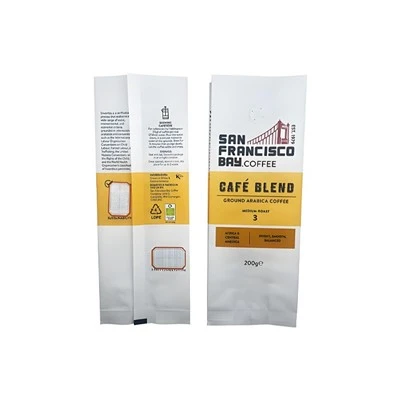
Coffee and roasted goods. Bio-based PE mono-material flat bottom bags with a mono-material degassing valve give you a recyclable structure, five printable panels, and the aroma protection roasters expect. That's the logic behind our recyclable flat bottom coffee bags with valve.
Snacks, powders, dried fruit, pet food. Bio-based PE [stand up pouches] cover the widest range and are the lowest-risk switch. Recyclable stand up pouches in PE/PE run from 100 g to 1 kg, with zippers, tear notches, and hang holes, and they cut pack weight hard versus rigid formats.
Liquids, sauces, refill pouches. Liquids need a seal and barrier spec built around the fill; compostable liquid pouches fit well where the local market actually composts.
Dry food where compostability is the headline story. Compostable food packaging bags let the pouch itself carry the message instead of the pack copy.
Markets where recycled content, not feedstock, is what's required. If the retailer wants post-consumer recycled content instead of plant-based resin, [PCR packaging] is the right answer - the two get mixed up constantly, and PCR content and bio-based content are separate claims.


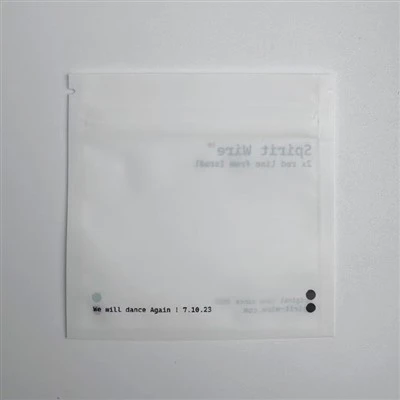

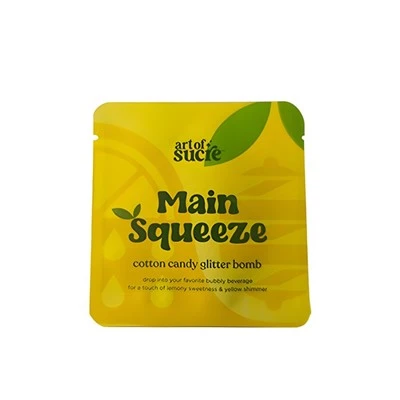
Both families run through the same core formats - stand up pouches, flat bottom bags, side gusset and pillow pouches - so switching materials almost never forces a format change. If you need recycled content rather than plant-based resin, our PCR packaging range covers that on its own track.
If you're not sure which family fits, send us the product, fill weight, shelf life, and target market. Nailing down the material decision usually takes less time than approving the artwork.
Compliance - and the claims you can actually defend
Material choice and claim wording have to be decided together. The second one is where brands get caught.
Food contact comes first. Food use structures need to support FDA requirements and EU 10/2011, and the documentation has to cover every layer, including inks and adhesives. For compostable structures, the certification you actually want is EN 13432 or ASTM D6400 issued by a recognized body - not a supplier's own line.
Then there's the claim itself. "Made with bio-based PE" is a factual material statement; "100% sustainable" isn't. With green-claim rules tightening - including Europe's packaging and packaging waste regulation and its recyclability-by-design requirements - unsubstantiated environmental wording is a real commercial risk, not a PR nitpick. The safe position: state the material family, give the bio-based or recycled content as a percentage, note the certified end-of-life route, and stop there.
Next step
If you're evaluating plant-based packaging for a specific product, we'd rather shortlist the structure for you than send a catalogue. Send LepuPouch your product category, fill weight, required shelf life, target market, and whether your claim is recyclability or compostability, and we'll come back with:
A recommended material family, and the bio-based or PCR content percentage where it matters
The pouch format, thickness, and closure combo that fits your filling line
Barrier and seal data for the proposed structure, so you can check it against your shelf-life requirement
Packaging spec and food-contact documentation for your market
Lead times on our eco ranges right now: 500 pieces minimum order quantity, 3–5 working days for samples, 7–15 working days for mass production, plus free stock samples. These are indicative and confirmed per spec once size, material, and print method are locked.
Contact us with your spec and we'll come back with a structure recommendation and a quote.