

Why Snack Brands Are Rechecking Their Flexible Pouches
Chips, nuts, granola, popcorn, crackers, and jerky all need the same thing from their packaging: grease resistance, moisture protection, and a shelf appearance that drives purchase. What has changed is that buyers, retailers, and brand owners now add a fourth requirement to that list: the bag must be PFAS free.
This is not a label trend. More procurement teams are writing PFAS free food packaging into their supplier specifications, and more retail partners are requesting compliance documentation before a product reaches the shelf. At LepuPouch, this has come up in nearly every snack bag inquiry over the past year, from small brand owners to established wholesalers.
The Regulatory Push Behind the PFAS Free Requirement
PFAS (per- and polyfluoroalkyl substances) have been used in various food-contact packaging applications for oil, water, and grease resistance. In the U.S., the FDA has confirmed that manufacturers are no longer selling PFAS-containing grease-proofing substances for food-contact use, and in January 2025 the FDA announced that related food contact notifications were no longer effective after these uses were abandoned.
State rules are moving in the same direction. Washington State, for example, prohibits certain food packaging products with intentionally added PFAS, including bags and sleeves covered by its rules. Other states and international markets are following similar paths. For a snack brand selling across state lines or overseas, the practical question is no longer whether to comply. It is how to verify that a flexible plastic pouch actually delivers the required grease and moisture protection without relying on fluorochemicals.
LepuPouch works with brands shipping to the U.S., EU, Canada, and Australia on a regular basis. The compliance questions vary by market, but the starting point is always the same: get the exact finished bag specification, then check which documentation applies.
What Makes a Plastic Snack Bag Truly PFAS Free
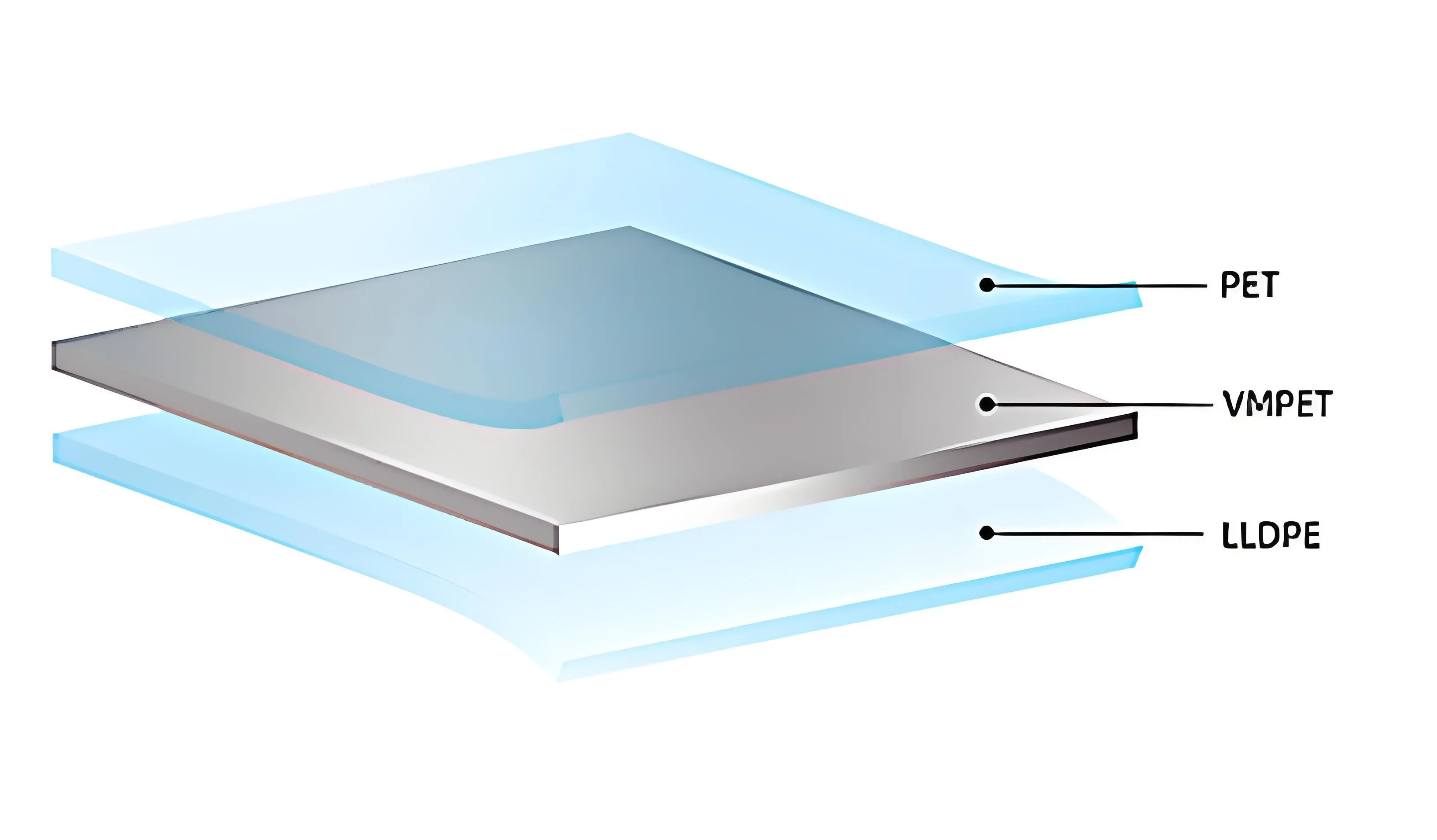
A plastic snack bag is not automatically PFAS free simply because it is made from plastic. The claim has to be tied to the exact finished structure, the production process, and the raw materials used in every layer.
A typical flexible snack pouch combines several layers: a printable outer film for graphics and shelf appearance, a barrier layer for flavor and freshness, and a food-contact sealing layer. Depending on the product, common structures include PET/PE, metallized film/PE, or a mono-material PE format. The right choice depends on the snack's oil content, moisture sensitivity, filling temperature, storage conditions, and distribution route.
To confirm a PFAS free claim, ask the packaging supplier for documentation on the specific bag specification. That may include a material declaration, supplier statement, food-contact documentation, or a test report. If the buyer requires a specific analytical method or threshold, confirm it before sampling, not after production. This is one of the first questions LepuPouch raises with new clients who mention PFAS free requirements.
How Flexible Plastic Pouches Deliver Grease Resistance Without Fluorochemicals
Oil and Moisture Protection Through Film Structure
Oil-rich snacks can stain, weaken, or degrade unsuitable packaging. A properly selected laminate or mono-material structure provides grease resistance through the film and barrier layer itself, not through a fluorochemical coating on top. Moisture protection matters just as much for chips, crackers, granola, dried fruit, and powdered snacks that go soft or lose crunch in humid conditions. The correct structure should match the actual product, not a standard material list.
For example, a high-oil nut product may need a higher-barrier metallized structure, while a low-oil cracker may work fine with a simpler PET/PE format. LepuPouch's engineering team reviews each product's oil level, moisture sensitivity, and filling conditions before recommending a structure.
Shelf Presence That Does Not Compromise on Compliance
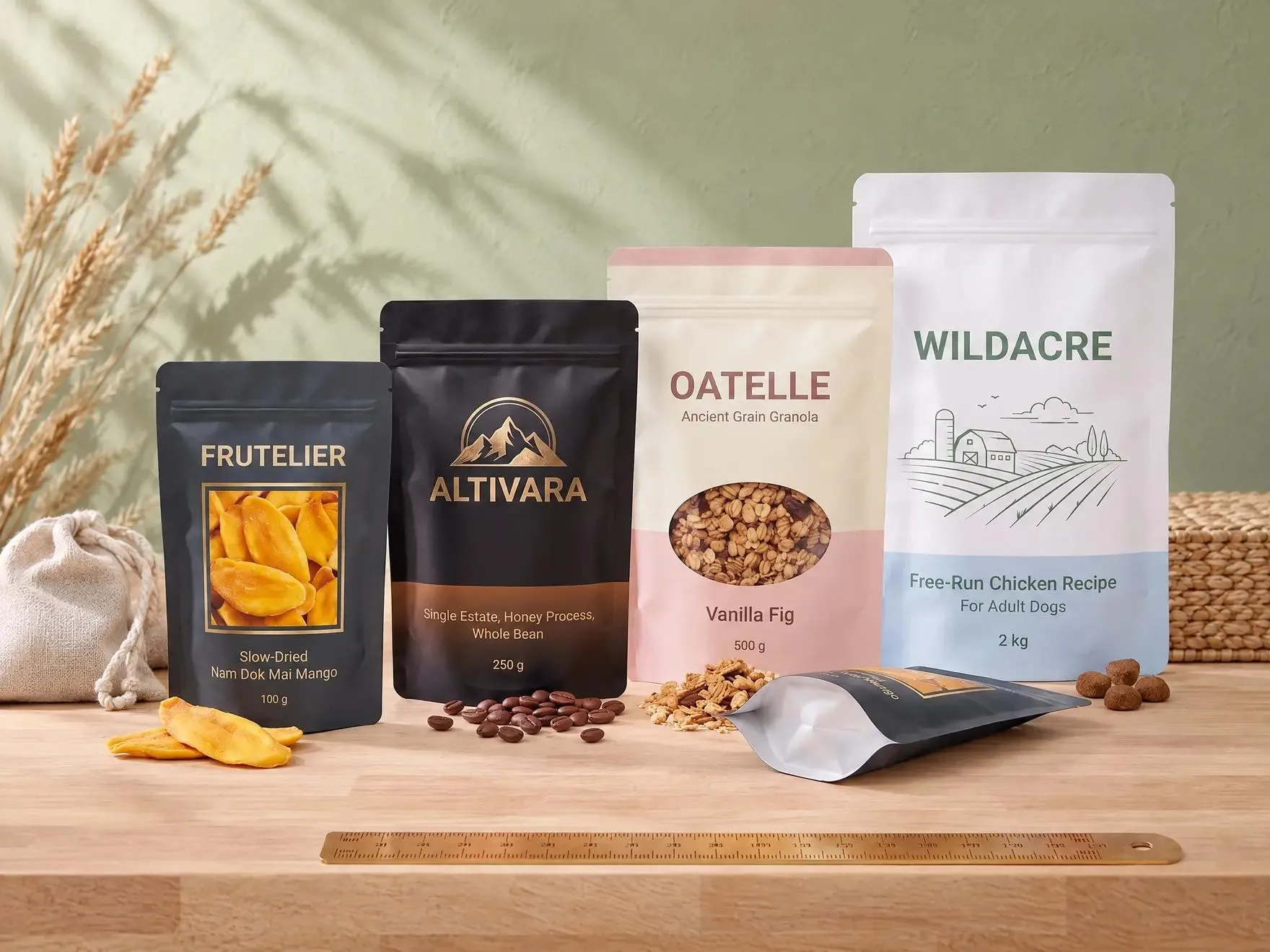
PFAS free packaging does not mean plain packaging. Stand-up pouches, flat pouches, pillow pouches, and side-gusset bags all support full-color branding, matte or glossy finishes, metallic effects, and custom windows. A stand-up format keeps the front panel visible on retail shelves. Flat and pillow pouches fit single-serve products and high-speed filling lines. The bag format should align with the product, the filling equipment, and the sales channel.
Browse LepuPouch's snack pouch collection at lepupouch.com to see stand-up pouches, flat pouches, pillow pouches, and side-gusset bags across different sizes and print finishes.
Opening and Resealing That Matches Consumer Habits
Multi-serve snacks benefit from a zipper that lets consumers close the bag after opening. Single-serve packs often work better with an easy-tear notch or laser score. These details affect user experience and product loss after opening. They should be decided during sampling, not added as an afterthought. LepuPouch supports zipper closures, tear notches, laser scores, and rounded corners as standard customization options.
Printing Options for Different Order Volumes
Snack brands frequently test new flavors, seasonal designs, and test-market quantities. Digital printing suits short runs and multiple SKUs. Gravure printing suits larger recurring orders. The practical choice depends on artwork, quantity, and repeat-order frequency, not a blanket preference for one process. LepuPouch offers both digital and gravure printing, so brands can start with low-MOQ digital runs and switch to gravure as volumes grow.
Buyer's Checklist for PFAS Free Snack Bag Sourcing
Before placing an order for grease resistant snack bags, work through these points with the packaging supplier:
- Is PFAS intentionally added to the film, ink, adhesive, coating, or any accessory? Request a written statement for the exact finished structure, not a general factory statement.
- What is the complete material structure? Confirm the outer film, barrier layer, food-contact layer, ink, adhesive, zipper, and every accessory.
- Is the bag suitable for oily or greasy products? Describe the product and request sample testing under realistic filling and storage conditions.
- What level of moisture and oxygen protection is needed? Chips, nuts, granola, dried fruit, and jerky each demand different barrier performance.
- Which compliance documents are available for the target market? Requirements differ across the U.S., European Union, Canada, Australia, and other regions.
- Will the selected structure match the sustainability claim? If the bag is marketed as recyclable or mono-material, verify the local collection and recycling requirements. PFAS free and recyclable are not the same claim.
- Can the supplier support sampling and repeat production? A good packaging decision should hold up not only for the first sample but also for future orders and additional SKUs.
Custom PFAS Free Snack Pouches from LepuPouch
LepuPouch manufactures custom flexible plastic packaging for food brands, wholesalers, and product companies worldwide. The snack bag program covers chips, nuts, dried fruit, candy, crackers, jerky, granola, popcorn, and other dry foods. The company's production facility supports full customization across size, structure, printing, and features.
Available bag formats include stand-up pouches with or without zippers, flat pouches and pillow pouches for single-serve snacks, side-gusset bags, and flat-bottom bags for larger pack sizes. Barrier structures range from standard PET/PE to high-barrier metallized films, with mono-material PE options available for brands exploring recyclable packaging formats.
Reference structures such as PET/VMPET/PE or MOPP/VMPET/PE, combined with zipper and tear-notch features, are commonly used for oil-rich snacks. Actual material selection should be confirmed against the product and target market rather than copied from a standard list. LepuPouch also supports tear notches, laser scores, rounded corners, clear windows, and custom hang holes.
For printing, LepuPouch provides both digital printing for short runs and multiple SKUs, and gravure printing for larger recurring orders. This means brands can test new flavors or seasonal designs with low minimums, then scale up to production runs without changing the bag structure.
When requesting a quotation, provide the product type, pack weight, bag size, artwork status, expected order quantity, filling method, and target sales market. If the project requires PFAS free or fluorochemical free packaging, state that requirement at the beginning so the material structure and documentation can be reviewed before sampling. Visit lepupouch.com/contact-us to start a conversation with the LepuPouch team.
Next Step: Review Your Snack Bag Specification
There is no need to redesign an entire packaging line to get started. Send the current bag, product details, or target dimensions. The LepuPouch team reviews the application and recommends a suitable bag format, material structure, printing method, and closure option. PFAS related documentation and final compliance should be confirmed for the exact finished specification and destination market.
Explore more flexible packaging solutions at lepupouch.com, or reach out directly through the contact page to discuss a specific snack bag project.
Price is for reference only and must be confirmed through direct communication.