

For spice packaging buyers, oxygen and moisture barrier performance is usually the first specification on the table. Highly aromatic products require another check before a custom pouch moves to sampling: whether the spice oils and oleoresins are compatible with the inner heat-sealant layer. A pouch can look sound at the start of storage and still develop tackiness, odor absorption, weak seals or interlayer problems later.
Black pepper, chilli, cinnamon, cloves, ginger, cumin and spice blends contain volatile compounds that may interact with the polymer in direct contact with the product. The risk depends on the formulation, oil content, storage temperature, exposure time and sealing process. That is why a packaging specification should cover product compatibility as well as barrier values.
How spice packaging sealant layers fail
A laminated spice pouch commonly combines an outer printable film, a barrier layer and an inner sealant. The contact layer has two jobs: it must remain suitable for contact with the spice, and it must form a stable heat seal during pouch production.
A conventional PE-based sealant can work well for many ordinary dry foods. Spice formulations with a high level of volatile oils or oleoresins create a more demanding environment. Oil components may interact with the sealant polymer matrix and change its physical behavior. Early signs can include a different film surface, increased tackiness, odor absorption or a decline in seal performance. With longer exposure, compatibility issues may contribute to delamination or a loss of package integrity.
The package does not have to contain liquid oil for this issue to occur. A dry powder can still contain enough extractable oil to create a compatibility concern. For procurement teams, the practical starting point is the actual spice formulation rather than the product name alone.
Why LDPE should not be the default for every spice pouch
LDPE is widely used as a heat-seal layer because it offers good sealability, flexibility and processing characteristics. However, conventional LDPE should be evaluated carefully for products such as turmeric, chilli, ginger, pepper and blends containing these ingredients. Materials considered for more demanding applications include HDPE-containing coextrusions, cast polypropylene, ionomers and EAA-based sealant systems.
This does not mean that every spice pouch needs to replace LDPE. A mildly aromatic dry powder may perform well in a conventional PE structure. A high-essential-oil spice or oil-containing blend may require a contact layer with a different resistance profile. The right decision comes from matching the sealant chemistry with the product and confirming the choice through application-specific testing.
When comparing packaging suppliers, buyers should ask for the proposed sealant type, the intended product-contact side and the test plan used for sample approval. A material description alone does not show how the finished laminate will behave on the filling line or after storage.
CPP film and other options for oil-rich spices
Cast polypropylene, or CPP, is one material commonly considered when higher resistance to spice oils is needed. Its role is more than producing a heat seal. The contact layer also needs to retain its properties during prolonged exposure to the product, so the film should be assessed as part of the complete pouch structure.
CPP can be evaluated as the inner sealant where a conventional PE layer raises compatibility concerns. Ionomer and EAA-based sealants may also be considered when a project requires a particular balance of sealing performance and resistance. HDPE-containing coextrusions are another option mentioned for demanding spice applications.
For packaging procurement, these materials should be treated as candidates for a test matrix rather than as automatic substitutes. The final selection depends on the spice composition, required shelf life, pouch format, filling conditions and seal requirements. A production trial is more useful than choosing from a generic list of oil-resistant films.

Spice Stand-Up Pouch
A custom pouch format for retail, refill and food-service spice packaging programs.
View spice pouch details
Spice Packaging Bags
Packaging formats and structures matched to spice format, filling method and storage conditions.
View spice bag options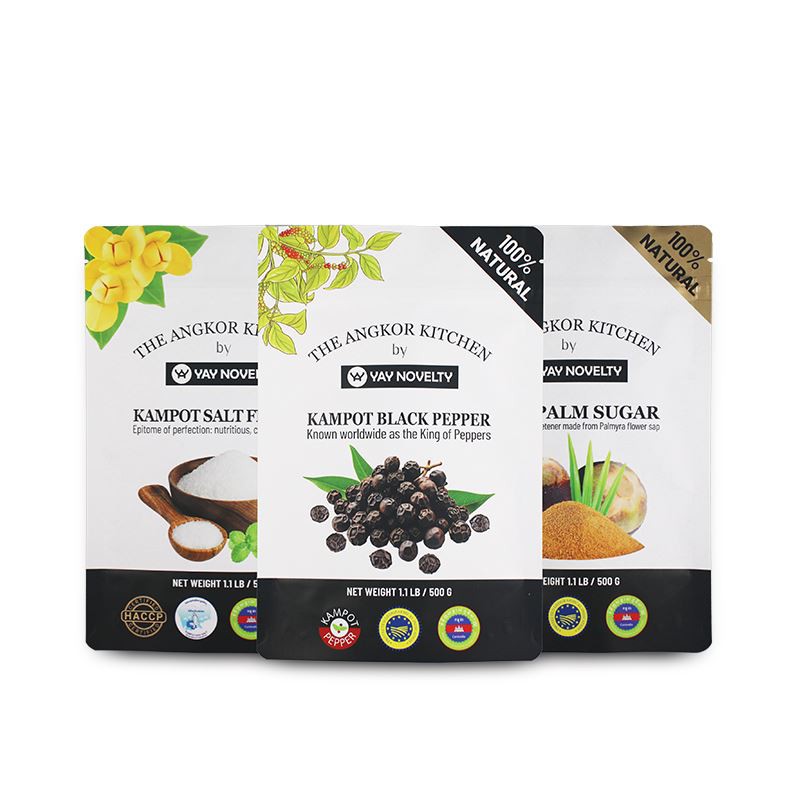
Resealable Spice Bags
A resealable format for products opened repeatedly after the initial heat seal.
View resealable bagsSealant resistance and powder contamination are different risks
A compatible sealant cannot compensate for a contaminated seal area. Fine spice particles may enter the seal during filling. Once powder sits between the two film surfaces, the layers may not make continuous contact, which creates a separate path to leakage.
Oil compatibility and powder contamination can produce similar symptoms, but they require different corrective actions. Increasing the seal temperature may help in one situation and cause deformation or material damage in another. Temperature changes should therefore follow a review of the sealant, the powder behavior and the sealing conditions rather than replace that review.
Filling speed, powder characteristics, seal width, jaw pressure, sealing temperature and dwell time should be considered together. For B2B buyers, filling-line validation is an important part of sample approval because a film that seals well in a laboratory test may behave differently when fine particles enter the sealing interface on the customer's equipment.
Review the adhesive and the complete laminate
The inner sealant is only one part of an oil-resistant spice pouch. Some spice oils are mobile enough to migrate into or interact with other packaging components. Industry references have documented cases involving inks, adhesives and laminate integrity, so the adhesive system deserves attention during supplier evaluation.
A laminate with strong oxygen and moisture performance can still be unsuitable if the contact layer or adhesive system is incompatible with the product. For high-oil applications, the specification should be reviewed as a sequence: product, sealant, tie or adhesive system, barrier layer and outer film. Looking only at the outer appearance or nominal barrier value leaves out the layers most exposed to the product.
Choose the structure by product and shelf-life requirement
There is no single best spice packaging film for every application. The structure depends on spice composition, oil content, shelf-life target, filling process and packaging format. For conventional dry powders, PET/Met-PET/PE or BOPP-based laminates may be suitable when compatibility has been confirmed. Flexible spice packaging may also combine polyester, metallized polyester, BOPP, aluminum foil and PE or PP-based sealants.
For products with higher levels of volatile oils or oleoresins, the inner contact layer deserves closer review. CPP, HDPE-containing coextrusions, ionomer and EAA-based systems can be evaluated where additional resistance is required. For particularly demanding products, an aluminum-based barrier laminate can protect against oxygen, moisture and light, while the sealant is selected separately for product compatibility and sealing performance.
Barrier selection and sealant selection are related, but they are different decisions. A technical specification should record both instead of using a high barrier value as a substitute for contact-layer testing.
A practical test plan before bulk purchasing
Before mass production or a larger purchase order, evaluate the proposed laminate against the actual spice or a representative formulation. The following checks help connect material selection with real production conditions.
- Product-contact compatibility. Place the actual spice or a representative formulation in direct contact with the proposed sealant. Record changes in appearance, tackiness and mechanical properties.
- Seal strength after storage. Compare initial seal strength with results after accelerated or real-time exposure. The comparison shows whether the seal remains stable during the intended storage period.
- Leak testing. Check package integrity after storage, handling and transportation. This helps separate a material problem from a sealing or handling problem.
- Lamination integrity. For high-oil products, inspect whether prolonged exposure affects interlayer adhesion or produces signs of delamination.
- Filling-line validation. Test the actual powder on the customer's filling equipment. Confirm seal width, jaw pressure, temperature, dwell time and filling speed together, rather than approving the film from a laboratory result alone.
This process gives procurement teams a clearer basis for supplier comparison, sample approval and production validation. It also creates a technical record that can be used when a packaging structure is revised.
The right question for spice packaging buyers
The useful question is not which film is strongest. It is which sealant remains stable in contact with this particular spice while still producing a reliable heat seal on the customer's filling line.
A high-barrier film can protect against oxygen and moisture, while the inner sealant determines how the pouch interacts with the product and how reliably it seals. Conventional PE-based structures may be sufficient for standard spice powders. High-essential-oil spices, oil-containing blends and products with demanding shelf-life requirements may justify evaluation of CPP, HDPE-based coextrusions, ionomer or EAA-based sealant systems.
If your team is requesting a custom spice pouch from LepuPouch or another packaging supplier, include the actual spice formulation, oil level, shelf-life target, filling equipment and test requirements in the brief. Selecting the final structure on product compatibility, seal performance and laminate integrity gives buyers a stronger basis for sample approval and bulk purchasing than barrier performance alone.
Share the spice formulation, oil level, shelf-life target, filling equipment and test requirements when requesting a custom pouch.